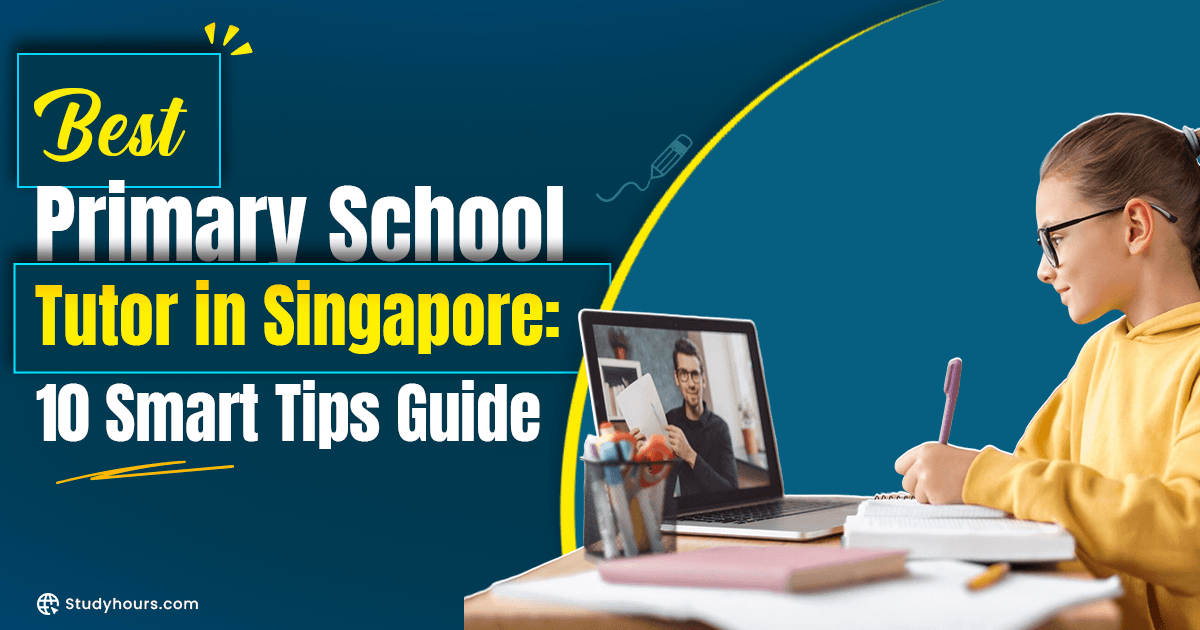
Primary school is a critical part of a child's education. It lays the groundwork for English, Maths, and Science. These skills will form the basis for all their future learning. If a child falls behind on key ideas very early on, it really can affect their progress later
A Primary School Tutor in Singapore may help bridge this gap. Lots of students struggle when topics get much harder. Some have difficulty solving maths problems. Others face challenges with writing or understanding questions altogether. Very often, the issue isn't a lack of effort but rather unclear basics themselves.
A great tutor provides quite specific support. They teach things step-by-step and really tailor their approach to the child's speed. They also provide lots of regular practice work and offer feedback all the time. This helps the child improve over time and builds their confidence too.
Choosing the right tutor really does matter a lot. The perfect support can help your child learn with lots of clarity - and even do better at school itself.
Understanding the Role of a Primary School Tutor
A primary school tutor really supports your child's learning - both thoroughly and systematically. The tutor's main job is to develop a very strong foundation in some of the most important subjects like English, Maths, and Science. This base isn't just about memorising facts - it also includes skills like understanding what we've read, solving problems one step at a time, and clearly explaining the answers we get.
An excellent tutor usually starts by assessing your child's current level. This is very often done through either a quick test or by reviewing their schoolwork. The goal is to spot those areas where your child really needs improvement. For instance, a child might be able to do simple additions quite well but find word problems difficult. Or another child might be a great reader but struggle to write out a complete answer for comprehension questions. Once the tutor identifies these areas of weakness, they can create lessons that focus directly on them.
Then the tutor teaches each concept in very small, crystal-clear steps. In Maths, this might mean breaking down a problem into its parts and showing your child a method they can actually follow themselves. In English, it could be teaching how to construct a sentence properly using all the right words and structures. In Science, it may concentrate on teaching some key terms and how to use them effectively in our answers.
Your tutor will also help the child learn how to cope better with tests. This includes how to start reading a question, how to manage our time well, and how to double-check our answers. These are very useful practical skills that lots of students often miss out on. With a bit of guidance, the child learns how to steer clear of typical mistakes they make all the time.
Another very important part of the tutor's role is giving feedback. An effective tutor keeps an eye on your child's work and their progress constantly. They observe both areas where your child is really improving and areas that still really need attention. Then they share all this information with the parents very clearly indeed. This keeps you always in the know - so you can act quickly if necessary.
Above all else, a tutor really builds your child's confidence levels. Whenever a child finally understands something, they experience much less anxiety. They participate even more in class. They become more willing to give a try with new types of questions. This change in attitude really has a big effect on the grades they receive.
Common Problems Facing Primary School Students
Primary school students in Singapore have very similar learning concerns. These issues often begin quite modestly - but do grow over time unless addressed effectively.
One frequent concern is really quite fundamental. A child may miss out on essential points early on. In Mathematics, it might be place value or fractions. In English, it could be grammar or sentence structure itself. Whenever new topics are built on these basics, the child really struggles to stay on top of it all.
Another problem is just having a really short attention span. Young children often lose concentration during lengthy lessons. And if the teaching approach doesn't engage them much, they'll tune out quickly. This results in a very poor grasp - and lots more errors.
Exam anxiety is extremely common, too. Certain children know the content well enough - but feel incredibly anxious during tests themselves. They rush through, misread questions or simply forget crucial steps. This really affects their test scores greatly, even though they've studied quite extensively.
Mindless memorisation is yet another problem. Some students attempt to memorise answers without truly comprehending the process involved. This approach might suffice for simpler questions - but utterly falls apart whenever the question changes somewhat. The child then feels really stuck and rather perplexed.
Practising less frequently really slows down progress significantly. Skills only get better with consistent use. If a child doesn't put in much practice time, they won't see significant gains in speed or accuracy. This becomes painfully obvious during timed tests under pressure.
Low self-confidence often follows from these challenges. When a child keeps making the same errors repeatedly, they may start doubting their capability quite a lot. They might even avoid the subject altogether or give up quite easily. This starts a cycle that's really tough to escape from without some guidance and support, indeed.
A truly effective teacher should recognise these issues and address the underlying reason. The goal isn't so much about giving even more work, but to teach in a way that seriously enhances one's understanding - and actually builds the necessary skills.
How to Select a Primary School Tutor for Your Child
Finding the perfect primary school tutor really requires a clear plan. Every step helps you make a much better choice - and avoids wasting time or money altogether.
Step 1: Understand Your Child’s Needs
Firstly, know exactly what your child needs. Some children struggle with basic concepts, while others need some help with exam strategies. When the target is clear, it's far easier to find the right tutor for them.
Step 2: Check the Tutor’s Experience
Experience really counts. A tutor who teaches primary school students will know their syllabus and exam format. They'll also know about common mistakes - and just how to correct them.
Step 3: Look at Teaching Style
A truly good tutor explains things very simply indeed. They don't rush - and they change the lesson depending on your child's reaction. If one approach doesn't work out, they try something else entirely.
Step 4: Take a Trial Lesson
Taking a trial lesson really helps you see how the tutor teaches. Watch how they explain things - and observe how your child reacts. Comfort and interest are quite good signs after all.
Step 5: Consider Class Size
Class size affects the amount of attention quite a lot. With one-to-one or small groups, the tutor can really concentrate on your child. They can correct any mistakes very quickly. Large groups often limit this process quite a bit more.
Step 6: Review Study Materials
Good tutors use pre-structured notes and practice papers. These should match the MOE syllabus. The right materials help your child practice the correct types of questions.
Step 7: Check Progress Tracking
A reliable tutor keeps track of progress quite well indeed. They set out very clear goals - and review them quite often. This really helps you see what has improved and what still needs a bit more work.
Step 8: Think About Your Schedule and Location
Your lessons really need to fit into your daily routine. Taking online tuition will save you loads of time getting around. In-person lessons might work better for children who need a bit more help - right there and then.
Step 9: Read Reviews - but Make Sure They're Real
Reviews can give you some clues, yet shouldn't be all you go by. Try to speak with the tutor personally when you can. Ask them just how they would help pupils who struggle and what their lesson planning is like.
Step 10: Concentrate on Value - Not Just Price Tag
Costs are important, sure - but it really shouldn't be the whole point. That one really cheap option might not provide very good results after all. An excellent tutor will offer lots of extra value to your learning, making it so much more worthwhile.
Final Thoughts
Finding a suitable primary school tutor in Singapore is quite difficult indeed. It's not merely a matter of finding a well-known one. Your child requires someone whose teaching style really complements theirs. An efficient tutor will fill out the missing pieces of their knowledge base. They construct an incredibly solid base. This builds your child's self-assurance all the more. They are able to deal with their school assignments themselves. They can even get ready for their exams too.
Get Personalized Help
Match with an expert tutor for your exact curriculum and goals.
Frequently Asked Questions
What does a Primary School Tutor in Singapore teach?
A Primary School Tutor in Singapore teaches core subjects like English, Math, and Science. The tutor really focuses on building very strong basics. They explain concepts in simple, easy-to-understand steps - then give practice exercises based on the MOE syllabus. They also help students learn just the right way to answer exam questions correctly and clearly.
How do I know if my child needs a tutor?
You might notice your child's grades are falling, test results aren't great, or their confidence has dropped. Some kids take a really long time to finish their homework or avoid certain subjects altogether. When you see these signs, it shows your child might really need a little extra help. A tutor can help figure out the gaps and improve understanding - so much faster than you think.
What's the right age to start tuition?
There's no one 'right' age. Some kids start in lower primary to build very strong basics right from the start. Others wait until they have a bit more trouble. The perfect time really depends on your child's individual needs. Early support can actually prevent problems down the road - you never know what might happen when they're older.
Should I choose online or in-person tuition?
Both options can be really effective. Online tuition saves a lot of time commuting - and offers super flexible schedules. In-person tuition gives you a chance for more direct interaction and closer, personal guidance. The best choice all depends on how your child learns best - and what keeps them most focused and engaged.
How often should my child attend tuition?
Most students usually attend around one to two lessons every week. The exact number really depends on the subject - and your child's specific needs. Having too many lessons can actually cause stress. A good balance with plenty of time for practice really works best - trust us!
How long does it take to see improvement?
Progress takes time - don't worry! Some kids show noticeable improvement in just a few weeks - while others might need a few months. It really depends on where your child started from - and their level of effort. Regular lessons and lots of consistent practice will actually lead to very steady results.
What should I look for in a good tutor?
A good tutor really explains concepts very clearly - and adapts perfectly to your child's pace. They use structured materials all the time - giving regular, helpful feedback. They also set very clear goals - and track your child's progress really closely over time - every step of the way.
Are group tuition classes effective?
Group classes can still work - if the class size isn't too big. They let your child get a little interaction and even learn alongside their peers. However, less attention is really given to each individual child. One-on-one lessons give so much more focused - and personalised support - ever
Published by StudyHours Global Editorial Board